


The Jetspeed FT9 Pro is the next level in CCM’s hybrid kick point line. This stick looks to blend responsiveness, control, and durability into CCM’s most balanced stick yet. And with the fresh graphics, it looks the part as well. We’ll take a look at how CCM has elevated one of their most versatile stick families.

Jetspeed FT9 Pro Graphics
CCM decided to move a little bit away from the standard red colouration of the Jetspeed with a new graphic design, which you’ll see in both the FT9 Pro and the FTW Pro. Of course, there’s a red variation, but others have also landed, with silver being the most prominent section in each colourway. The art design along the shaft flows with the colours into something between a flame, a paint splatter, and camouflage, depending on however you want to describe it to your teammates. At the same time, the graphics aren’t too overbearing or busy, sticking mostly to the upper and middle of the shaft.

Hybrid Kick Point
As always, the Jetspeed line will continue to use a hybrid kick point. If you aren’t familiar, this means the shaft goes from soft to stiff to soft again, creating a hinge effect that adjusts depending on how you want to shoot. Whether that’s a slap shot or a quick snap shot, the hybrid kick point is engineered to help you release that shot hard and fast at the net. This kick point makes Jetspeed a perfect fit for players who find themselves in various positions across the ice, particularly centres and offensive defensemen.

Jetspeed FT9 Pro Technology
Neosense Fuze
This technology in the hosel is exclusive to the Jetspeed line and works to enhance the stick's hybrid kick point further. Unlike how it is in other CCM families, the hosel here has been tailored specifically to channel feedback from the blade up through the shaft, giving you noticeably better puck feel every time you make a play. As mentioned earlier, this stick is best suited for players who find themselves in a wide range of situations on the ice—from battling for pucks along the boards to releasing quick shots in the middle of traffic. In those high-pressure moments, having that little extra control when pulling the puck in tight or skating it down the ice can make all the difference, especially in tough, contested areas.

Dual-Control Blade
This blade is what will really help your shots and passes pop off the stick. Most stick blades keep one stiffness profile throughout, either uniformly soft for flex and feel, or stiff for power. But that's not the case with the FT9 Pro. Instead, CCM engineered a soft-stiff Dual-Control blade that, as the name implies, makes use of two distinct zones: the heel and the toe.
Each zone is designed to combine control, accuracy, and speed—all qualities you want in a hybrid stick that needs to perform in all areas of the ice. The heel is soft, which makes receiving hard passes and controlling the puck noticeably easier, especially in traffic. Meanwhile, the toe is stiff, so when you load up a quick snap shot, that stiffness translates directly into shot power and precision. The softness in the heel additionally provides some flex on the blade for a harder shot. Together, the two zones offer the best of both worlds

"R" Geometry and ST2X Spread Tow Weave
The general construction of the FT9 Pro is very similar to what we've seen in the CCM Vizion series, which isn't a bad thing at all, given that line's success. The same "R" geometry can be found in the shaft profile, along with a Sigmatex ST2X spread tow weave running throughout both the shaft and the blade. ST2X boosts durability by delivering a more consistent carbon weave with fewer gaps and weak points compared to traditional weaves. And because it runs throughout the entire stick, the durability benefits are spread evenly from the top hand, all the way to the tape job.
Every CCM stick on the market comes with a shaft geometry classification, so players can know exactly how the stick feels in their grip before they step on the ice. For the FT9 Pro, CCM went with their classic "R" geometry. Specifically, this profile uses rounded corners paired with concave sides. This design offers a shape that's both comfortable to hold and responsive in play, giving you the confidence you need to transition between quick stickhandling and leaning in for a hard slapshot.
ALUPLI Composite Shaft
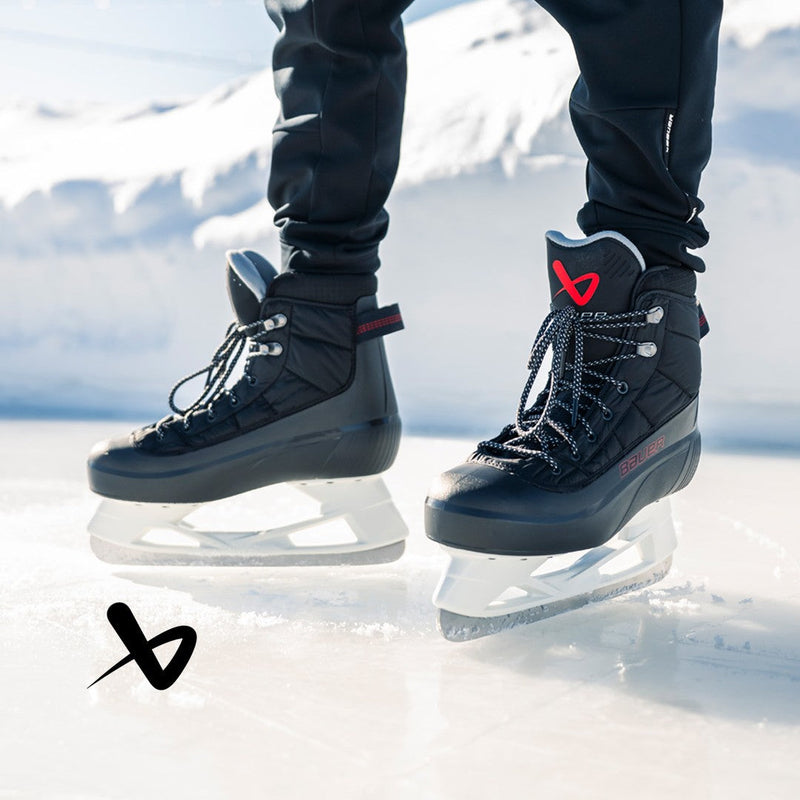
Entry-level skates feature softer boots, though some lower-priced options may lack replaceable blades or thermoforming capability. It’s a good idea to check with a sales associate to decide which skates will be best for your activities.
Kids’ skates have been evolving; many manufacturers are starting to implement extra adjustment systems into Youth equipment, so it can grow with your child. This shift can help make picking out the right fit skatesmuch easier while also helping you save money on skate replacements.
It’s important to note that, for all players, skates will take some time to get used to . Skates require a breaking-in period for all players, with discomfort varying depending on the individual. This adjustment phase can occur immediately or after 30-45 minutes of play. The unpleasant sensation isn’t just exclusive to new players either— even experienced players may encounter discomfort. Your skates should soften up the more you play in them. The Hockey Shop can also take a look at your skates after you’ve had a few ice sessions and punch out any pressure points to lessen that discomfort.

Final Thoughts
Jetspeed is one of my favourite stick lines, and the FT9 Pro looks like another solid step up in construction and technology. The way every part of it—like the Neosense Fuze for hosel responsiveness, the Dual-Control blade for adaptibility, and the ALUPLI composite shaft—empowers the stick’s hybrid design and overall versatility is what makes the FT9 Pro such a well-rounded, high-performance stick. We're certainly excited to see it in action.


Leave a comment